

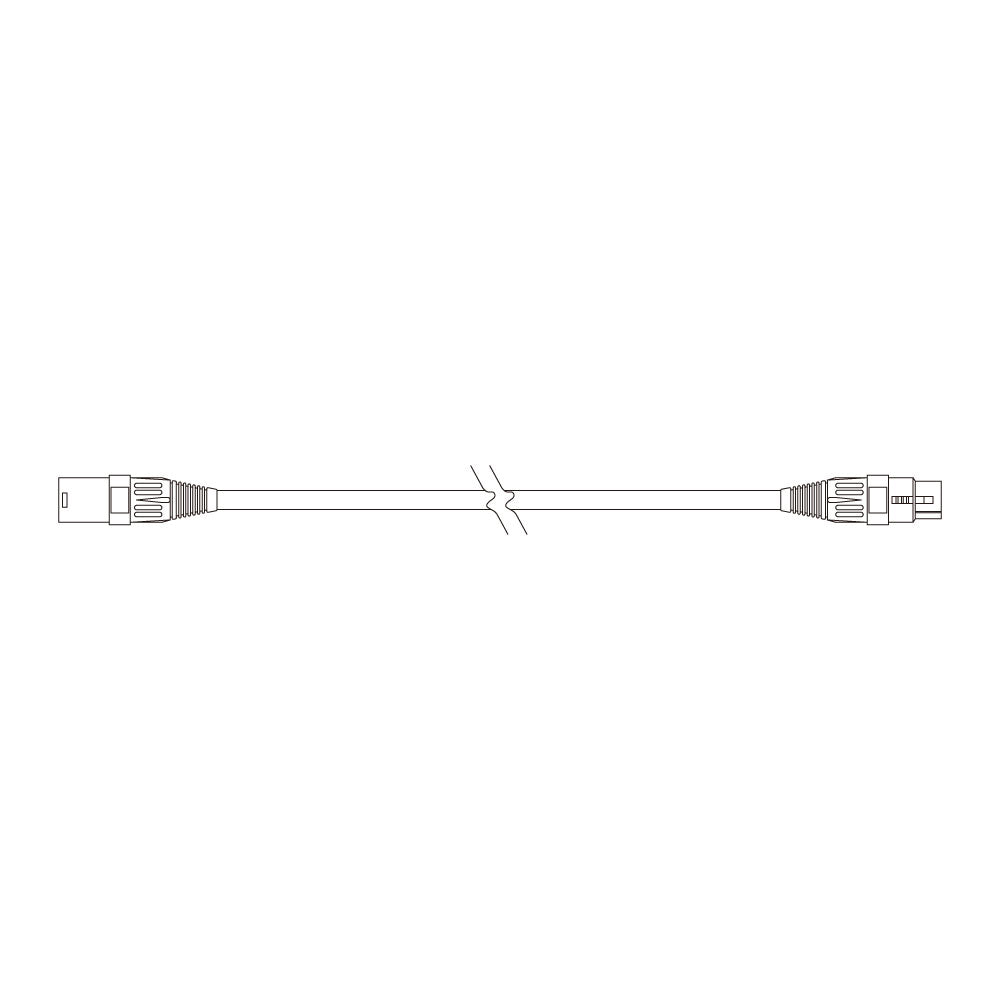
Product Description
Overview
The KUPO KCWDP224TBK Portable DMX Data Cable is built for professional lighting control runs that need stable signal behavior and a flexible jacket. It combines 22 AWG (American Wire Gauge) tinned-copper conductors, foamed polyethylene insulation, 100% aluminum/mylar foil shielding, and a dedicated tinned-copper drain wire inside a matte black soft-PVC jacket.
Why It Matters
The dual-pair format gives lighting crews two DMX512 universes in one jacket, which can simplify trunk lines and universe distribution. The cable is specified for DMX512 use, with ETL-verified performance, flame-retardant construction, and a jacket designed to resist UV and fungus during portable production work.
Key Features
- 2 twisted pair / 4 core construction for DMX512 control wiring
- Flexible construction supports portable use and tight bends
- Foamed-PE insulation on color-coded pairs helps maintain low capacitance
- 100% aluminum/mylar foil shield with 22 AWG tinned-copper drain wire
- Matte black soft-PVC jacket (RAL 9005) is flame-retardant, UV/fungus resistant, and ETL-verified for DMX512 performance
Applications
KCWDP224TBK is suitable for DMX512 control runs, console-to-dimmer links, trunk-line distribution, universe wiring, portable rental rigs, touring systems, theatres, architectural lighting, and themed environments.
Compatibility
Use KCWDP224TBK where a 2-pair DMX512 data cable is appropriate. The conductor colors are red/blue and white/green, and the working / test voltage rating is 30 V / 500 V.
Frequently Asked Questions
Is KCWDP224TBK intended for DMX512 lighting control?
Yes. The specification describes it as a professional DMX data cable with ETL-verified DMX512 performance.
Why does the cable use foil shielding and a drain wire?
The 100% aluminum/mylar foil shield and tinned-copper drain wire help maintain signal integrity in portable lighting-control environments.
Should I choose the 2-pair version?
Choose the 2-pair version when you want two DMX512 universes available within one jacket.