

Product Description
Overview
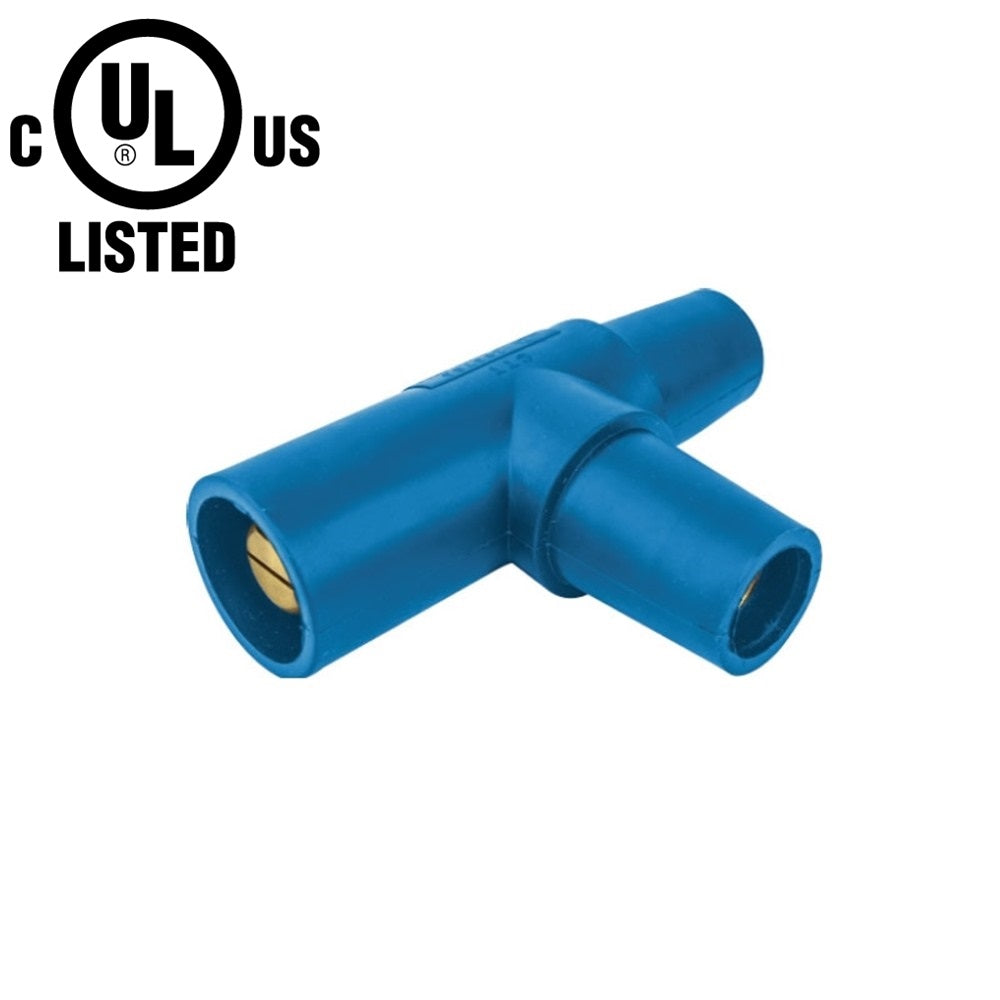
The KUPO KL-400MFFB is the blue 400 A single pole tapping T connector for K-Lok / Cam-type temporary power systems. It uses an M-F-F configuration, one male connection to two female connection points, for branch-style temporary power layouts.
Why It Matters
A tapping T is a practical electrician's part: it lets a crew add a second path from an existing compatible feeder point while keeping the setup inside the same 400 A single-pole connector family. The blue housing is useful where the site color code assigns blue to a specific feeder role, but the final electrical assignment must still follow the power plan.
Key Features
- M-F-F tapping T configuration provides one male connection and two female connection points
- 400 A maximum current rating with 600 V AC / 250 V DC reference for heavy temporary power work
- Machined brass contacts support reliable conductivity in high-current feeder applications
- Santoprene is suited to production and industrial handling
- UL and cUL listing reference supports professional temporary power documentation
Applications
Use it for daisy-chain feeder setups, extra distro feeds, touring and rental power packages, stage and studio temporary power, or industrial temporary distribution where one compatible source must feed two lines.
Compatibility
Designed for KUPO K-Lok 400 A / CAM-type compatible systems. Use only where the complete electrical plan supports the resulting branch load, connector layout, color assignment, and cable accommodation.
Frequently Asked Questions
Is this the M-F-F tapping connector series?
Yes. This series is the M-F-F tapping T connector, with one male side and two female connection points.
Is it the same as the three-fer connector?
No. The tapping T gives two female outputs. The KL-400M3F series is the three-fer style with three female output connection points.
What branch configuration does it provide?
The M-F-F configuration provides one male connection and two female connection points for a branch-style layout.