Overview
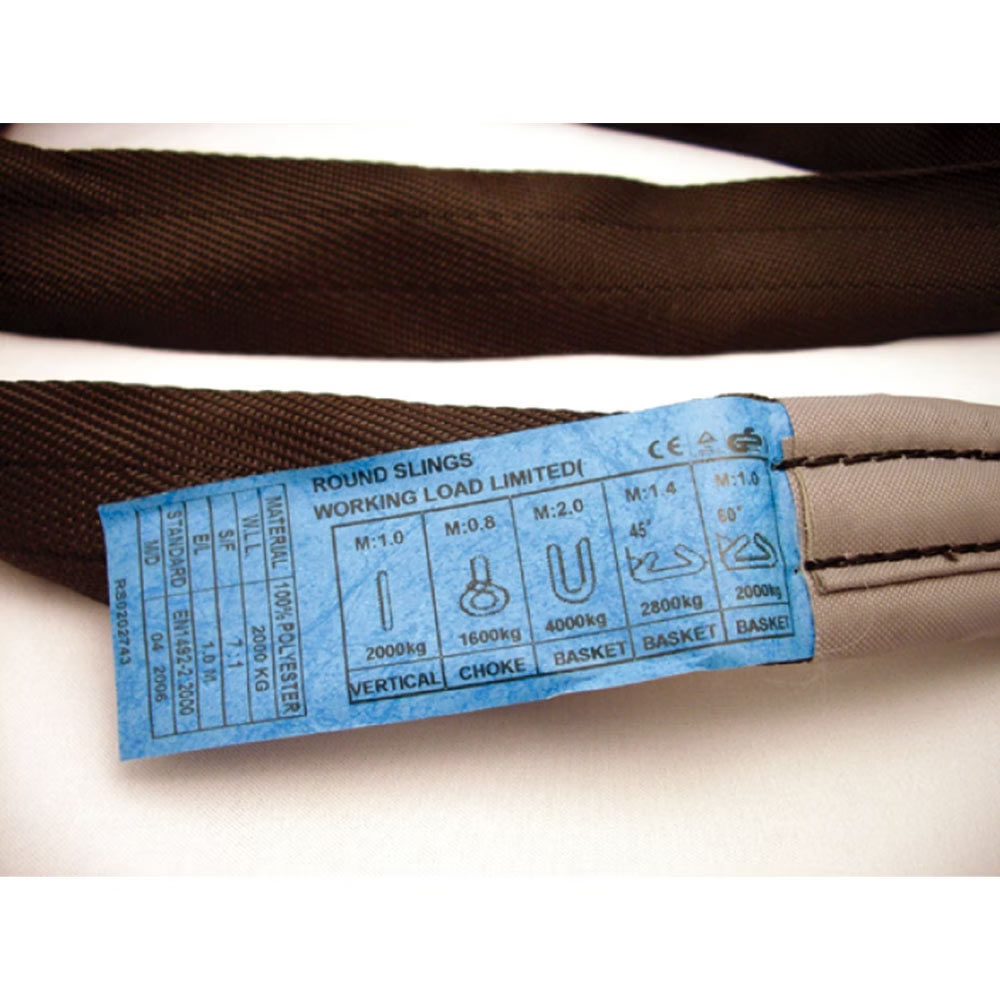
The KUPO RS-202 is a black polyester endless round sling for stage rigging, built to ISO 4878 and DIN EN 1492-2 with CE and GS safety references. This single 2 M endless sling uses polyester core yarn inside a woven polyester tubular jacket, giving riggers a soft 2000 kg Working Load Limit (WLL) sling that visually disappears against truss, drape, and dark scenic surfaces.
Why It Matters
RS-202 gives more wrap distance when the 1 mm sling is too short around wider truss, scenic pieces, or support structures. It is a practical step up without moving into long-sling territory.
Key Features
- 2000 kg Working Load Limit (WLL) with two woven black capacity stripes for stage-friendly identification.
- 7:1 safety factor and ≤ 3 % at rated capacity stretch at rated capacity support predictable rigging behavior.
- Polyester round sling construction grips loads without the scratch and cut concerns of wire rope around finished surfaces.
- Identification tag, unique serial number, and CE declaration or test certificate support inspection and documentation.
Additional Technical Notes
- Construction: Polyester core yarn inside woven polyester tubular jacket
Applications
Use for soft-rigging speakers, lighting fixtures, scenic elements, truss wraps, finished surfaces, and stage applications where a black synthetic round sling is preferred.
Compatibility
Use only within approved sling rigging methods, rated load limits, inspection procedures, and the applicable rigging plan.
Frequently Asked Questions
Why is the sling black instead of brightly color coded?
The black sleeve is intentional for stage work so the sling stays discreet against truss, drape, and dark scenic surfaces. Capacity is indicated by woven black stripes.
What does the two-stripe marking mean?
The source notes that each stripe equals one ton of WLL, so two black lines identify the 2000 kg sling capacity.
Can this replace a steel wire rope sling?
Use the sling type specified by the rigging plan. Polyester is better around finished or delicate surfaces, while steel wire rope may be chosen for sharp edges, abrasion, or long-term exposure.